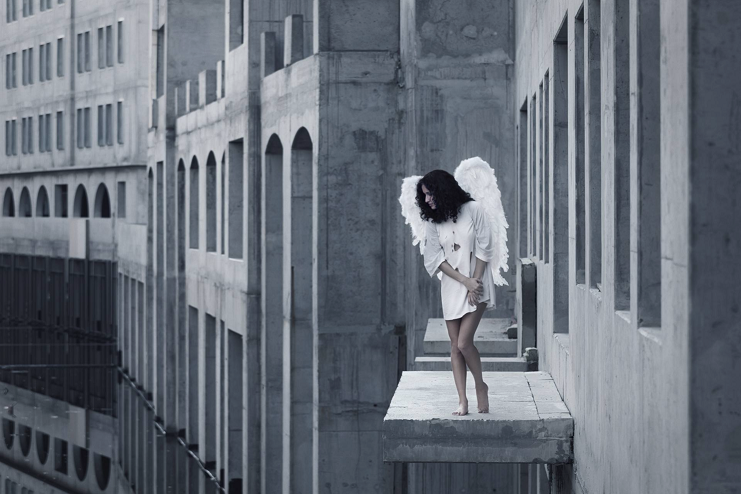
Peter Zelei, Hungary
The City of Angels 3
Photography
27.6 H x 41.3 W x 0 in
Private collection
Peter Zelei is a Hungarian visual artist who specializes in portraits, conceptual imagery, landscapes and also photo manipulations. From his use of colour and surreality, he creates a reality found only in his imagination, but with an emotion that is undeniably human. He explores the divide between darkness and light, unafraid to explore themes that others may find uncomfortable. He exposes the rawness, surreality, mysticism and poetry of his surroundings. His photographs and photo manipulations are created within an immense subtleness and ease. They take the observer on a journey into the most intimate realms of the human experience. Tina Lorien (Gallerie Lorien)
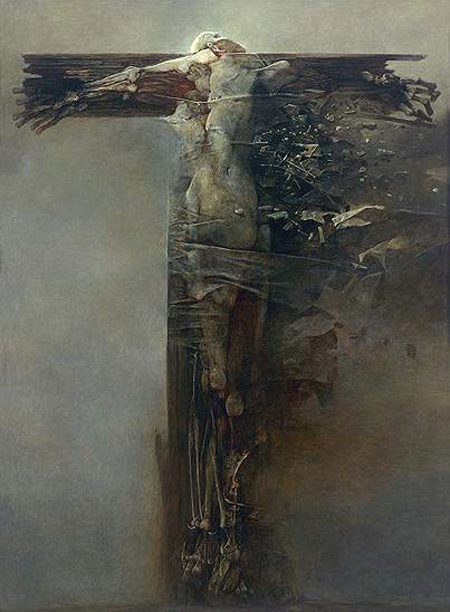
Zdzislaw Beksinski
Untitled, Beksinski Cross, mid 1960’s
Painting
The Historical Museum in Sanok
Zdzisław Beksiński, (24 February 1929 – 21 February 2005) was a Polish painter, photographer and sculptor, specializing in the field of dystopian surrealism. Beksiński did his paintings and drawings in what he called either a ‘Baroque’ or a ‘Gothic’ manner.
Beksiński was born in Sanok, southern Poland. He studied architecture in Kraków. In 1955, he completed his studies and returned to Sanok, working as a construction site supervisor, but found out he did not enjoy it. During this period, he had an interest in montage photography, sculpting and painting. When he first started his sculpting, he would often use his construction site materials for his medium. His early photography would be a precursor to his later paintings often depicting peculiar wrinkles, desolate landscapes and still-life faces on rough surfaces. His paintings often depict anxiety, such as torn doll faces, faces erased or obscured by bandages wrapped around the portrait. His main focus was on abstract painting, although it seems his works in the 1960s were inspired by Surrealism
Beksiński was stabbed to death at his Warsaw apartment in February 2005 by a 19-year-old acquaintance from Wołomin, reportedly because he refused to lend the teenager money. More on Zdzisław Beksiński
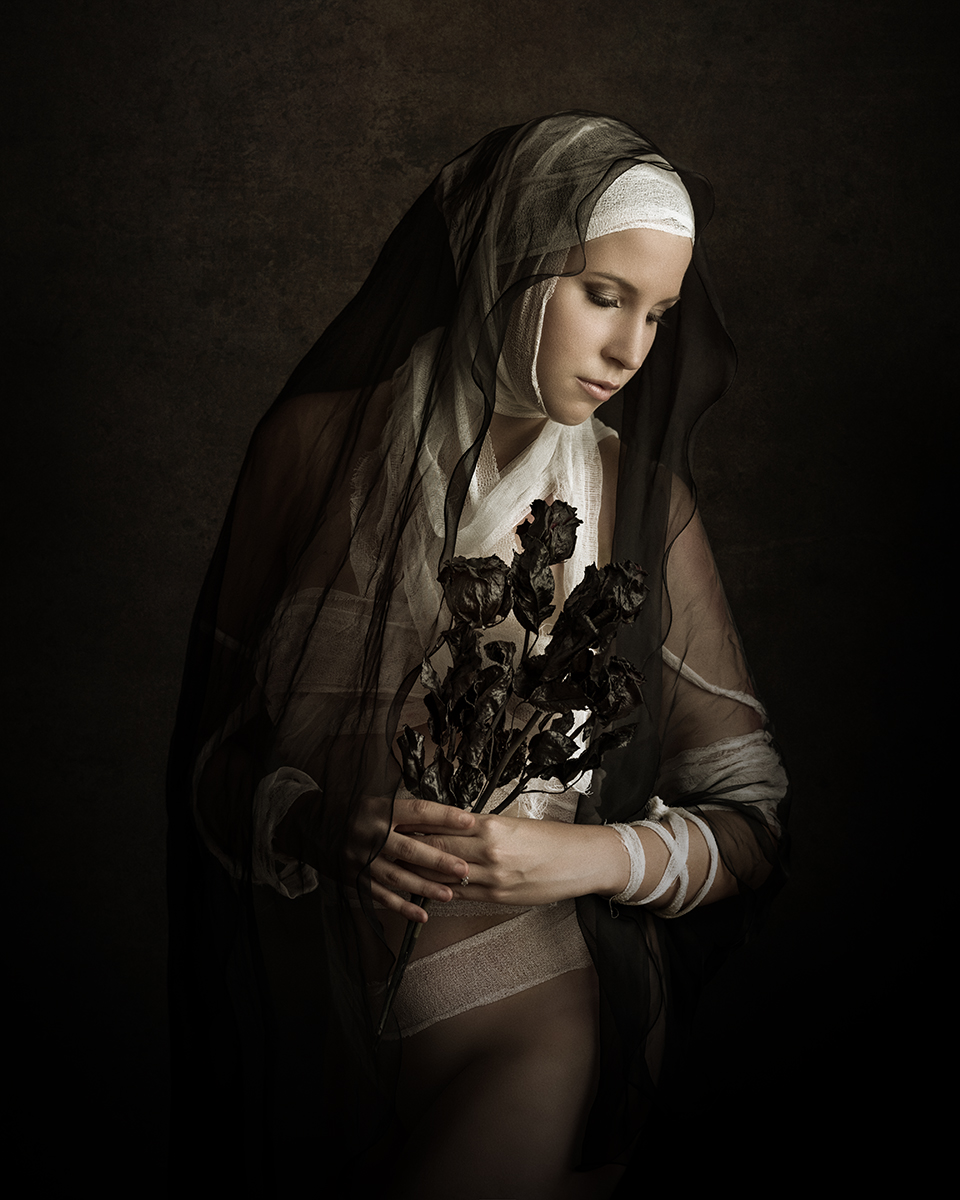
Peter Zelei, Hungary
Black Roses
Photography
Private collection
The magic of Black roses has attracted our attention for centuries. They appear to originate from a fairytale world. Their improbable and “unnatural” color inspires a powerful feeling of mystical expectation.
The color black has always been synonymous with death and mourning. It is thus the color of sadness and farewell. So, many people consider black roses to symbolize bereavement, loss and mortality. They are often used at funerals. A single black rose might be sent by a close friend and/or loved one leaving for a war or on a journey from which he did not expect to return. More on Black roses
Peter Zelei, Hungary, see above
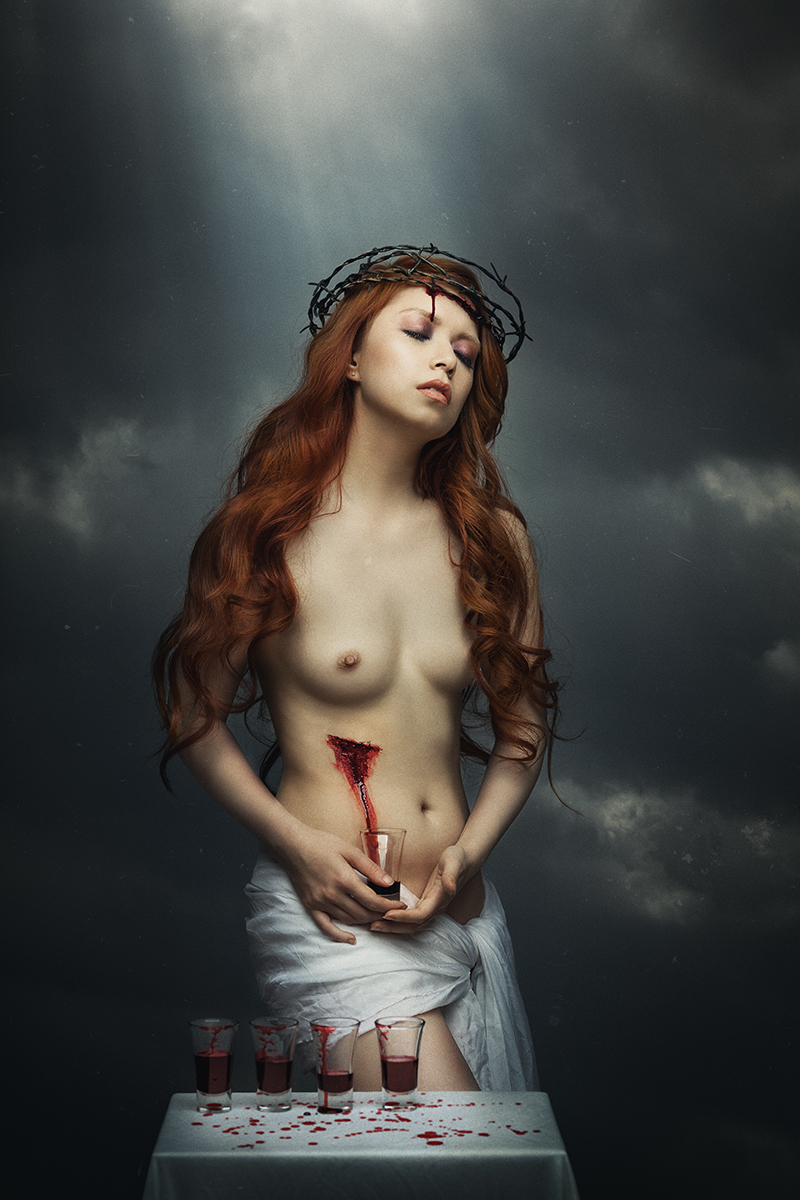
Peter Zelei, Hungary
Whoever Drinks My Blood, Caroline Madison
Photography
Private collection
Jesus said to them, “Truly, truly, I tell you, unless you eat the flesh and drink the blood of the Son of Man, you have no life in you. Whoever eats My flesh and drinks My blood has eternal life, and I will raise him up at the last day. 55For My flesh is real food, and My blood is real drink.…
Peter Zelei, Hungary, see above
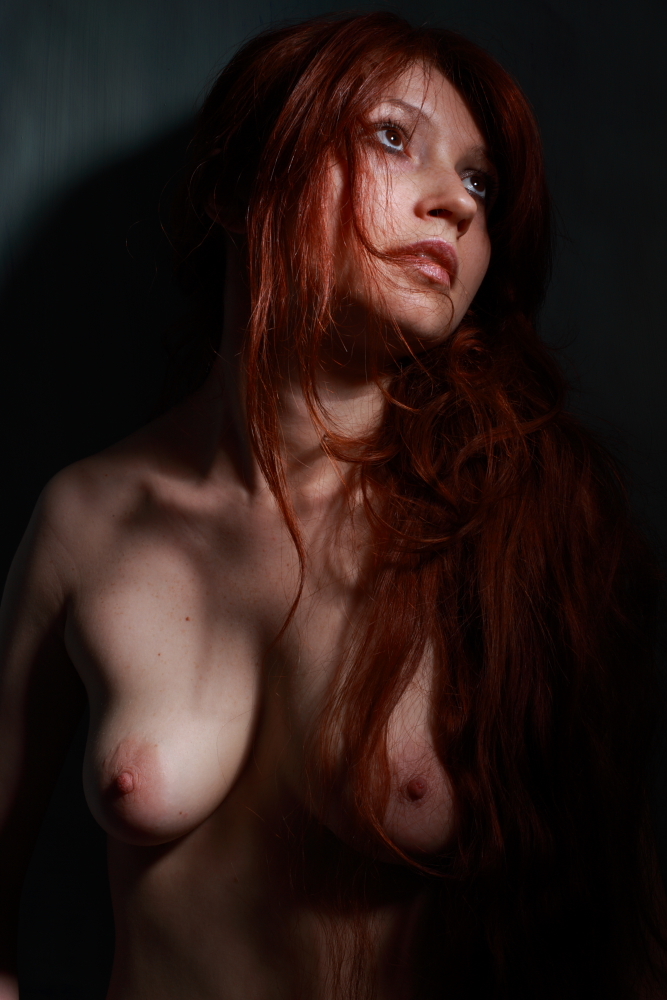
Gabriel Corcuera Zubillaga
Barbara like a Saint
Private collection
Saint Barbara is a former Christian saint and virgin martyr believed to have lived in Asia Minor in the 3rd century. Her story dates to the 7th century and is retold in the Golden Legend. It is as follows: Dioscurus, the father of Barbara, was a heartless nobleman who had a tower built so that he could lock his daughter away to deter suitors. At first the tower only had two windows; however, Barbara persuaded the workmen to add a third when her father wasn’t looking. She also secretly admitted a priest disguised as a doctor, who baptized her to become Christian. When her father returned, Barbara declared that the three windows symbolized the Father, Son, and Holy Ghost who ignited her soul. Dioscurus grew enraged and chased his daughter who had fled the tower. She hid in the crevice of a rock; however, a shepherd told her father of her hiding place. Once found, Barbara was dragged out by the hair and beaten by her father who next handed her over to the Roman authorities. She refused to renounce her Christian beliefs and was tortured. Miraculously, at the moment of her execution by her father’s sword, he was struck by lightning, his body devoured by fire. More on Saint Barbara
Gabriel Corcuera Zubillaga. Born 1968 Bilbao, Spain. “My work is the expression of my creative desires through the constant finding of new experiences. My pictures of women although appealing to the male psyche are essentially a feminist celebration of female sexuality.”
Gabriel’s work explores the beauty of human beings and attempts to celebrate them as they are, moving away from overstylized, romanticised versions whilst retaining a sense of mystery, driven by desires and openly vulnerable his figures when most powerful enrich and inspire. More on Gabriel Corcuera Zubillaga
Images are copyright of their respective owners, assignees or others
We do not sell art, art prints, framed posters or reproductions. Ads are shown only to compensate the hosting expenses.
If you enjoyed this post, please share with friends and family.
 Zaidan Gallery
Leave a comment